Request a Free Quote
Submit your enquiry online or call our Melbourne team. Share a recent electricity bill and, if you have solar, a photo of your inverter label.

Home / Services / Solar Batteries
Our Services
Store the solar power you don’t use during the day and run your home on it at night — more independence from the grid, more protection from rising tariffs.
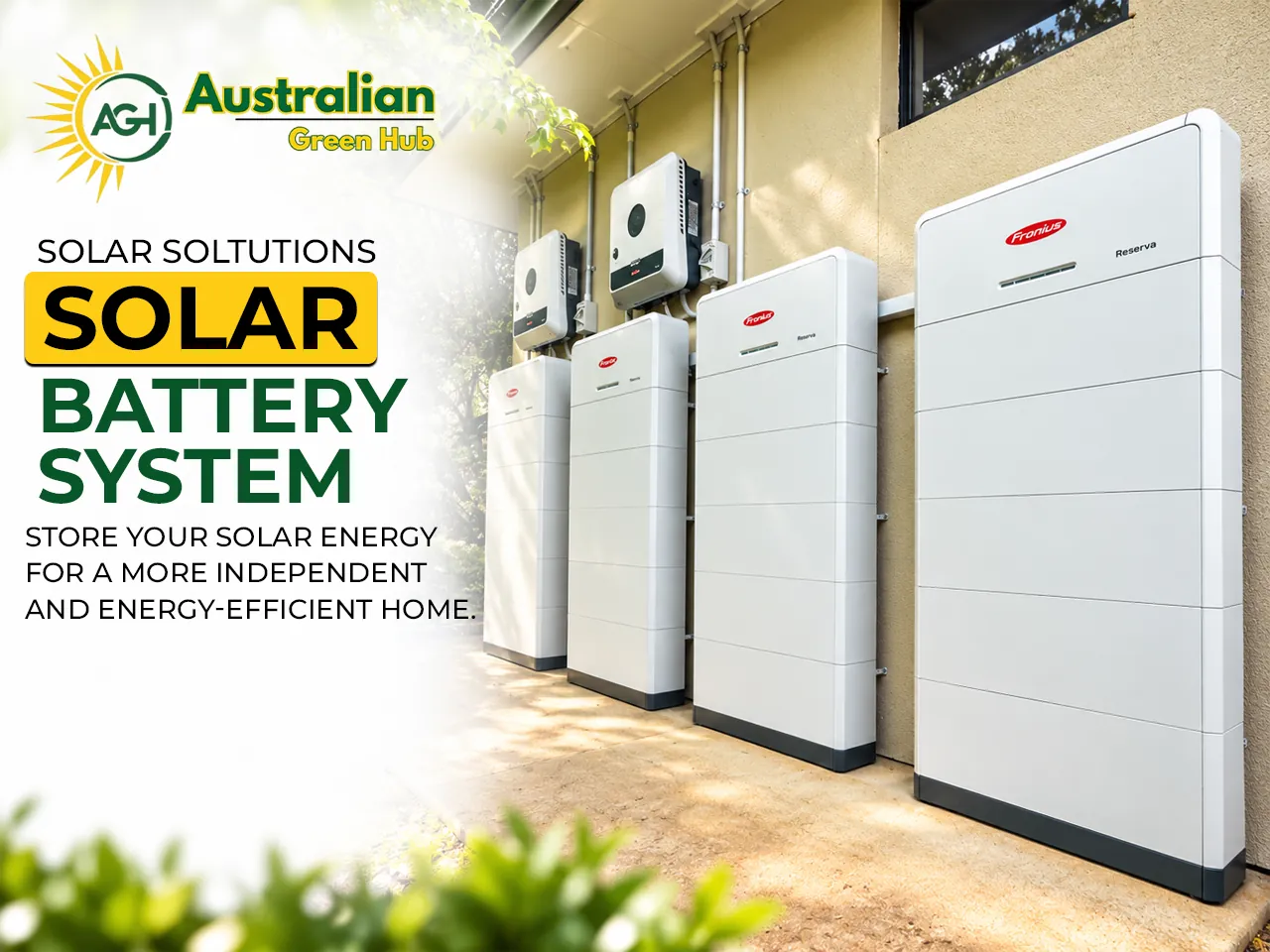
Overview
Without a battery, excess daytime solar is exported to the grid for a small feed-in tariff — then you buy power back at full price in the evening. A battery flips that equation, storing your surplus for when you actually need it.
We design battery systems around your evening usage and can integrate with your existing solar or as part of a complete new installation, with guidance on the federal battery incentives you may be eligible for.
Benefits
Power your evenings with the sunshine you collected during the day instead of exporting it cheaply.
Keep essential circuits running during outages with backup-capable battery systems.
Draw from your battery during expensive evening peak periods instead of the grid.
Monitor your system from your phone, and add capacity or join a virtual power plant later.
Battery rebate 2026
In Victoria, the main incentive for a home battery is the federal Cheaper Home Batteries Program, which opened on 1 July 2025. It works through small-scale technology certificates (STCs): an eligible battery creates STCs based on its usable capacity, and the value of those certificates comes off your installed price. The Clean Energy Regulator says the scheme is designed to give around a 30% discount on the upfront cost.
To be eligible, the battery and installation must meet the Clean Energy Regulator's requirements:
Check Your EligibilityHow the discount is calculated
The number of STCs a battery creates is its usable capacity (kWh) multiplied by an STC factor. Only the first 50 kWh of usable capacity counts, and the factor is applied at a reduced rate to larger batteries. The factor also steps down every six months as battery prices fall.
Every kWh of usable capacity up to and including 14 kWh earns the STC factor at 100%.
Each kWh above 14 kWh, up to 28 kWh, earns the STC factor at 60%.
Each kWh above 28 kWh, up to 50 kWh, earns the STC factor at 15%. Capacity above 50 kWh earns nothing.
The STC factor is 6.8 per kWh for May–December 2026 and falls to 5.7 for January–June 2027, then 5.2 for July–December 2027. For a 10 kWh usable battery, that is 68 STCs this year versus 57 from January.
The dollar value of each STC moves with the certificate market, so we confirm the exact discount in your written quote. You can also estimate certificates yourself with the Clean Energy Regulator's STC calculator. Full program rules are on the Clean Energy Regulator battery page. For worked 2026 vs 2027 examples by battery size, read our battery rebate Victoria 2026 guide. Figures checked 10 November 2026 (Clean Energy Regulator page last updated 29 October 2026).
How It Works
Submit your enquiry online or call our Melbourne team. Share a recent electricity bill and, if you have solar, a photo of your inverter label.
We review your evening usage, solar export and existing equipment, and check whether the battery and inverter you need meet the Cheaper Home Batteries requirements.
We recommend a battery size, location and backup setup that suits your home and budget, with the federal discount shown on your quote.
Qualified installers fit and commission the system to Australian standards, register it for STCs and show you how to monitor it from your phone.
Pricing
Every home is different, so we quote after looking at your property and usage rather than publishing a one-size-fits-all price. The main things that change the cost are:
Areas we serve
Our office is in the Melbourne CBD at 189 Queen Street, and we install home batteries across metropolitan Melbourne and surrounding Victoria — from the western suburbs such as Werribee and Point Cook, to the south-east growth corridor around Cranbourne, Clyde North and Pakenham, and the northern suburbs including Craigieburn and Mernda. Not sure if we cover your suburb? Contact us or request a quote and we will let you know.
Many customers pair a battery with new panels — see solar installation in Melbourne — or with a heat pump hot water system that can run on stored or midday solar. If you still have gas hot water, read our guide to the Victorian gas hot water rules from 2027, and browse more energy guides.
FAQs
It depends on your evening energy use and solar export. Many households start around 10kWh. We analyse your bills and usage to size it right — and because the federal discount is paid at the full rate only on the first 14 kWh of usable capacity, bigger is not always better value.
In most cases, yes — either AC-coupled alongside your current inverter or as part of an inverter upgrade. We assess your existing system first, including whether your inverter meets the Cheaper Home Batteries requirements.
The federal Cheaper Home Batteries Program gives a discount through STCs worth around 30% of the upfront cost, according to the Clean Energy Regulator. The number of STCs is your usable capacity multiplied by the STC factor (6.8 per kWh until 31 December 2026), with lower rates above 14 kWh. We show the exact discount on your quote.
Yes. The Clean Energy Regulator's schedule cuts the STC factor from 6.8 to 5.7 per kWh for January–June 2027, and to 5.2 for July–December 2027. It keeps falling every six months to 2030, so a battery installed in 2026 attracts more certificates than the same battery installed next year.
No. The battery must be technically capable of joining a VPP, but joining one is your choice. Once your battery is installed you can decide later whether a VPP offer suits you.
Quality lithium batteries typically carry 10-year warranties and are designed to last well beyond that, with thousands of charge cycles.
Get a free, no-obligation quote from Australian Green Hub. We'll assess your home, check your rebate eligibility and recommend the right system for your budget.